

Last Saturday afternoon, in a conversation with my wife about books, writers, newsletters, and blogs, I remembered I'd forgotten to publish.
"Oh! I didn't publish anything today."
I caught myself saying this with the same tone of surprise one has with an insight. This wasn't self-flagellation or disappointment; it was genuine surprise.
"It was the first week I haven't published since I began this 'project'…" I continued.
I hadn't just forgotten to write and publish—I had forgotten the entire existence of Saturday morning's commitment. She asked if I had something ready to launch. I did, almost finished. I chose silence instead. (Not with her—I don't want you to think I'm an asshole. I told my wife I wasn't going to publish: that silence.)
The Saturday morning immediately after Lisbon's tragic funicular accident, I had made a mistake programming that week's post, and it appeared close to lunchtime. As you may have noticed, I normally publish around 9 or 10 AM. I don't know why I decided on Saturday mornings. I actually have a recurring reminder set for every two weeks that I consistently ignore. This tells me that ignoring it was the real plan.
I digress. Getting back to early September: two unrelated subscribers and friends wrote asking, "Is everything alright?" They'd woven a story from absence, reading meaning into a gap. This time, no one noticed. Or if they did, they kept their stories to themselves. Even my wife only realized when I said it out loud.
forgetting as symptom
I could easily feed you the usual boring, busyness-signalling slop. The easy explanation sits right there: too much travel, competing obligations, the usual suspects. But easy explanations are usually hiding something harder—and more interesting.
When we forget what supposedly matters, we're often telling ourselves something we don't want to hear. The psychoanalytic tradition I emerged from would feast on this lapse—the return of the repressed, the unconscious rebellion against self-imposed constraints, the symptom that speaks what consciousness won't admit. Or, as I also learned, sometimes "a pipe is only a pipe," and my tiredness had simply gotten hold of me, my memory, and my creative needs.
This project began as something else: a creative outlet from the predictable chaos of everyday life. My personal and professional lives are dynamic but have become predictable in their dynamism. John Cleese would call them my "closed mode"—the operational state where we get things done, solve problems, implement solutions. This writing was supposed to be my "open mode"—that looser, less purposeful state where we play with ideas, where creativity actually happens.[1]
I think of Dominic Wilcox, specifically his wonderfully illustrated books about "variations on normal." In a short 2015 documentary about him, he explains how he committed to publishing a new creative output on his blog every day—this was the blog era, long before people started using the brand "Substack" as a noun. The constraint paradoxically freed him. The daily deadline removed the possibility of perfectionism, forced immediacy, and created momentum from nothing.
My Saturday morning was supposed to work similarly. A reliable opening in the closed system. A scheduled unscheduling. But what happens when the open mode develops its own closures? When the creative outlet becomes just another thing to manage?
the mechanism that wasn't
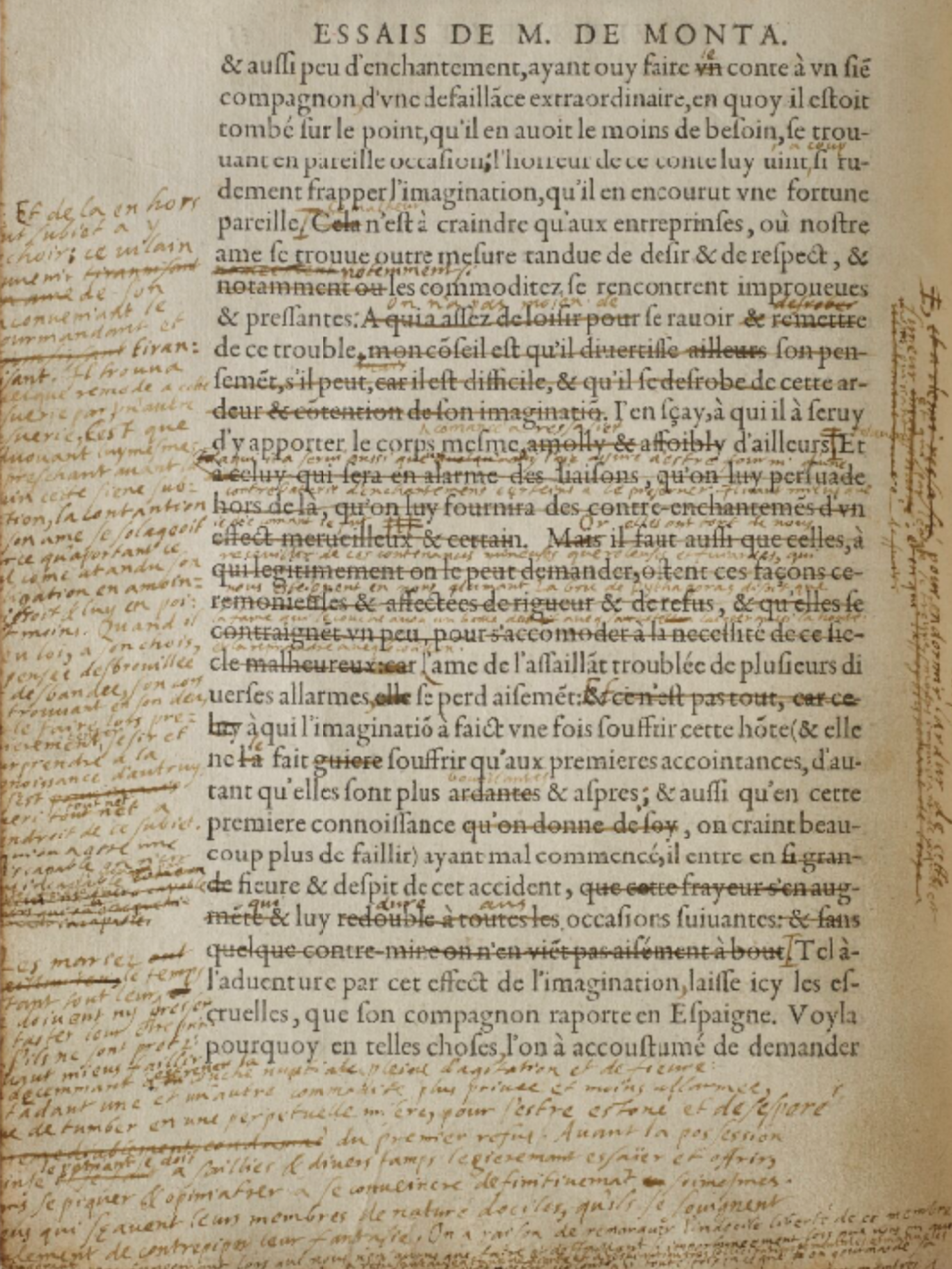
The Saturday rhythm emerged from internal necessity, not external obligation. A way to mark time, to create structure in weeks that otherwise dissolve into each other. I cherish my readers, and remain surprised that this many people want to read what I write—and even more surprised that I've never met more than half of them. But, in all honesty, I began to write following Montaigne's observation that "I am myself the matter of my book." To write is to transform the writer into a future reader—and reviewer, and editor—of himself.
But somewhere it shifted. The cadence became a contract, a temporal agreement with readers I'd never explicitly made. You give me your Saturday morning attention; I give you something to consider. (Someone wrote that they'd assumed this was "embedded in my life," something mechanical "unaffected by randomness"—as if consistency could protect against chaos.)
In readers' imaginations, I sit before my iPad every Saturday morning, crafting thoughts in real time. The reality involves other Saturday mornings—exercise, driving to football matches, the negotiations of family life. This summer I programmed five weeks of posts in advance. Scheduled spontaneity. Programmed uselessness.[2]
the gap that speaks
This lapse might be the most honest thing I've published—or failed to publish. The absence demonstrates what another essay could only discuss: the tension between structure and freedom, discipline and drift. The gap speaks more clearly than words about presence ever could.
By forgetting my own ritual without noticing, I accidentally enacted what I've been writing about. Contemporary life fills our attention so completely that even our resistances become routine. The publication questioning productivity had become another productivity measure. My practice of unstructured thinking had developed its own metrics.
What disturbs isn't the forgetting but its completeness. No stone in the shoe, no nagging sense of something undone. The space I'd carved for this writing filled with other things—or with nothing—and I hadn't noticed the filling.
the stories we tell ourselves
This forgetfulness could be a sign of progress, a step further towards coherence with the ideas I've been exploring. Or all this could just be a pseudo-intellectual, arrogant way of being apologetic about forgetting to publish.
When my wife suggested publishing the almost-ready text, I declined. Not from principle but from something harder to name. If the unconscious had engineered this forgetting, it deserved to be honoured with actual absence.
Two people wrote during the funicular accident Saturday, constructing concern from delay. No one wrote this time. They may have grown used to the rhythm, no longer needing its weekly appearance. The silence may have said nothing that needed questioning. There may not be that many people reading; they just open the emails (average open rate: 68%). They may just not care. They may have really important things going on in their lives. I may just have a narcissist's desire to be considered important. Or they noticed and chose their own silence—a respect for the gap, an understanding that not every absence requires investigation. I find this last scenario the least probable.
The expectation I'd imagined weighing on me was lighter than I thought. The "embedded mechanism" wasn't mechanical at all—just another story about order in a disordered world.
the loop we inhabit
Here's the joke that writes itself: this reflection on not writing has become writing. The missed publication generates its own publication. Even our failures to produce become productive. We can't escape this loop, only occasionally forget to keep it running.
And that forgetting—unconscious, complete, without struggle—might be the only freedom available. Not the grand gesture of refusing to write, but the simple accident of forgetting that writing exists. The body knowing before the mind that this particular consistency had become another form of what I write against.
What began as an open mode practice had developed closed mode characteristics. The space for productive contradictions had become predictably contradictory.
Next Saturday I may forget again. Or I may remember to forget. Either way, it will become something to write about, even if—especially if—I choose not to. The gap speaks its own language, one that doesn't need translation into words, though here we are, translating anyway.
I first explored Cleese's concept of "open" and "closed" modes in depth in "For a New Definition of 'Work'," arguing that our obsession with execution (closed mode) is systematically starving our capacity for creativity (open mode). ↩︎
This paradox of "scheduling" the unschedulable is a central theme of "The Utility of Uselessness," where I discuss how the most productive moments are often those we refuse to measure. ↩︎
This is a reader supported publication. If you enjoy the content, please consider a paid subscription or a donation. Also, if you thought of someone while reading the content, don’t hesitate to share it with them.