

Some paragraphs of this essay were drafted in May 2024, before I encountered Monika Jiang's excellent "The wellness industry won't heal you," which crystallized several ideas I'd been grappling with. Her analysis of wellness culture as a form of exploitation disguised as empowerment deeply informed the final version of this piece.

It was firstly written in Portuguese, and is yet to be published, as of 27 of September 2025.

“Pain and discomfort are part of the process. Push through the pain and you’ll find your true self!”

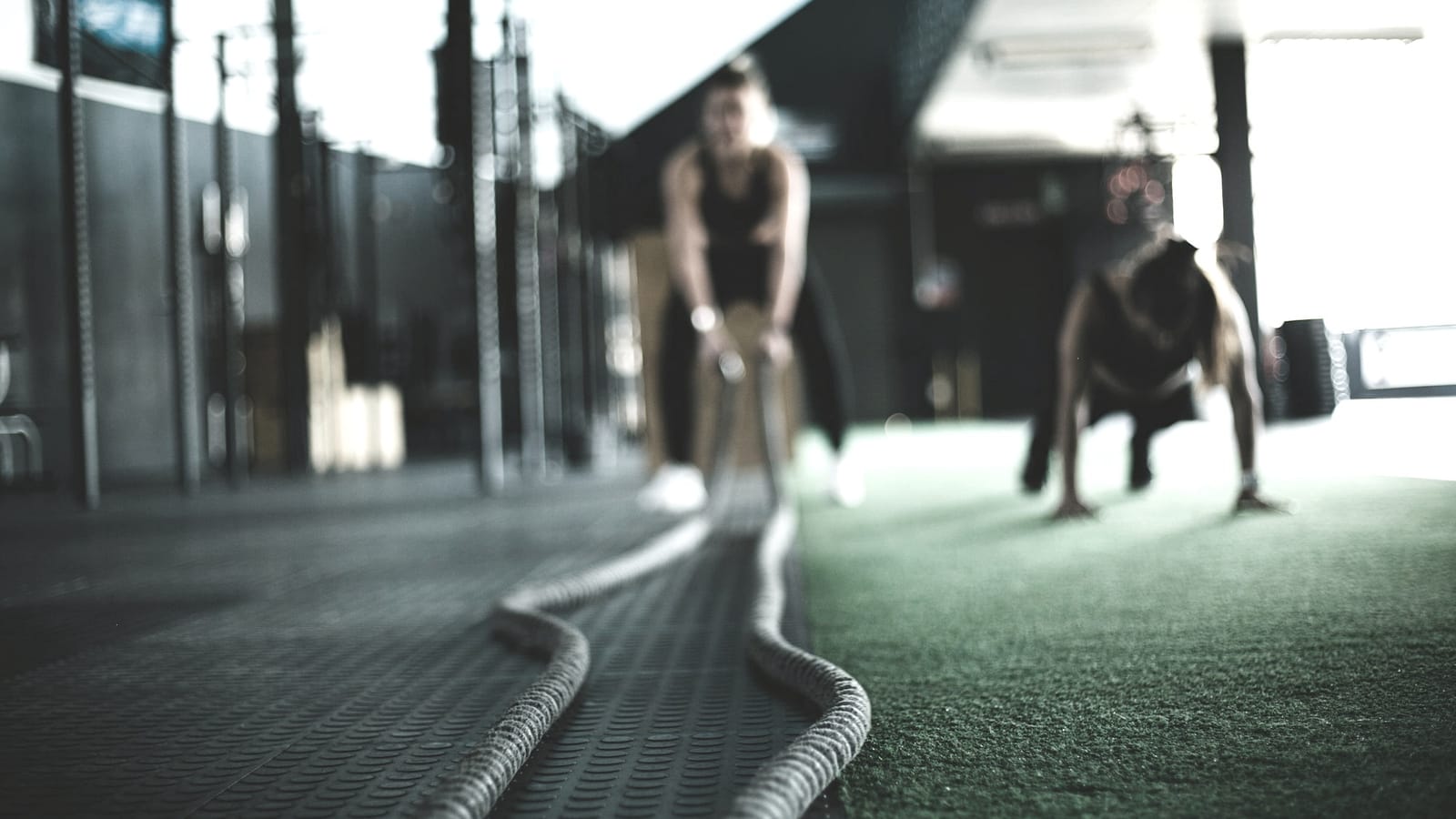
The instructor, half drill sergeant, half prophet in lycra shorts, was shouting while I tried to catch the breath that kept escaping me. We were 37 minutes into a HIIT (High-Intensity Interval Training) class and my heart rate was at 160. Between burpees and mountain climbers, he continued: “The only limit is yourself! Unlock your infinite potential!”

And that’s when it hit me.

Those phrases made perfect sense. There. In that moment. With my prefrontal cortex in survival mode, unable to process anything more complex than “keep breathing.” Yet something was deeply wrong with all of this. Something that transcended an overly enthusiastic instructor.

That’s when I realized I’d discovered an infallible method for identifying intellectual charlatanism. I call it “the aerobics test.”

It works like this:

Test A: Take any self-help phrase, one of those pseudo-profound or pseudo-intellectual gems you see on LinkedIn or in airport bookstore titles. Now imagine it being shouted by someone in neon spandex while telling you to do jumping jacks. Does it make sense? If it does, then it’s bullshit.

Test B: Take a gym motivational phrase. Transport it to a strategy meeting or a conversation about a complex personal problem. Does it still make sense? If so, it’s probably because it never made sense in the first place.

Think about it.

A bit more…

“Step outside your comfort zone!”—great for one more rep. Criminal when used as advice for someone with PTSD.

“Your only limit is your mind!”—excellent for push-ups. Idiotic when you have bills to pay.

“No pain, no gain!”—debatable even in the gym. Psychopathic when applied to human relationships.

There’s science behind this hypothesis. When we engage in intense exercise, the prefrontal cortex, the brain region responsible for critical thinking, becomes occupied managing the ongoing cardiovascular crisis. Studies show significant changes in oxygenation and activity in this region during moderate to intense physical effort.1

Daniel Kahneman explained it: when System 2 is overloaded, System 1 takes command.2 And System 1 loves a good rhyme. A catchy alliteration. A promise of transformation in three easy steps. It’s the perfect moment to smuggle idiotic ideas past our intellectual defenses.

It’s no coincidence that many self-help gurus make people jump on trampolines or walk on hot embers; that transformational retreats involve sleep deprivation, fasting, ecstatic dancing, or psychotropic ingestion3—techniques curiously shared by apocalyptic cults and corporate team-building retreats. The principle is simple: tire the body to numb the critical mind.

This numbness, however, reveals something more perverse in our culture. Self-help has transformed into a masturbatory and voyeuristic act. “Look at me! See how I transcend myself! Admire my journey!” It’s narcissistic exhibitionism packaged as altruism. “I’m sharing this to inspire you,” they say, while seeking to capitalize on our inadequacy.

Think of that acquaintance on Instagram. You know the one. Who posts motivational quotes over sunset backgrounds. Who documents every workout as if it were an Everest expedition. Who transforms every morning run into a metaphor about resilience.

Recognize the pattern?

It’s the pornography of effort. Like pornography, it creates unrealistic expectations, becomes addictive, and contributes to a feeling of dissatisfaction and loneliness that appears increasingly pervasive. As Monika Jiang brilliantly explores, “the wellness industry profits from our alienation while promising connection, creating a cycle of dependency disguised as empowerment.”

We live in times when being realistic is an offense.4 Optimists are the new fundamentalists of well-being. If you’re not smiling, you’re doing it wrong. If you’re not motivated, you’re lazy. If you don’t believe that “everything is possible,” you’re negative. And, of course, all this must be the subject of an artistic, theatrical performance.

This mentality contaminates every sphere of life. Companies adopt “agile methodologies”—which, on dispassionate analysis, reveal themselves as HIIT training applied to project management. HR departments speak of “resilience” and “growth mindset” as if they were corporate personal trainers.5 Schools implement “grit” programs teaching children that failure is just a lack of effort.

This is what happens when we confuse movement with progress. When we mistake agitation for action. When we believe that all problems—personal, social, structural—can be solved with more individual effort.

Byung-Chul Han was right about the burnout society.6 But he forgot to mention: it’s a society that confuses exhaustion with excellence. That mistakes sweat for substance. But his reading demands the kind of slow attention that our burnout society no longer permits.7

We need resistance. An “underground” movement of people who think while seated. Who reflect while lying down. Who contemplate while still. People who understand that Delphi’s “know thyself” didn’t need burpees to become ancient wisdom. That Kant didn’t write the Critique of Pure Reason between sets of squats. That Proust didn’t need morning workouts to find lost time—just a madeleine, plenty of rest, and a total absence of LinkedIn posts about his literary productivity.

Wilfred Bion spoke of “negative capability”—the capacity to tolerate uncertainty, ambiguity, and not-knowing.8 It’s the exact opposite of what the gym-self-help culture promotes. There, every problem has a solution in five reps. Every doubt can be overcome with more effort. But life doesn’t work that way. Neither does thought.

So here’s the definitive test. Next time someone tries to sell you wisdom—whether in a book, retreat, workshop, or motivational post—ask yourself:

Would this make sense if shouted while doing burpees?

If yes, run.

Unless you’re physically in a gym or doing some kind of physical exercise. There, let yourself go. After all, nobody expects philosophical depth between ab sets. The problem is when we leave the gym and continue thinking as if we were still there. The problem is when all of society transforms into a perpetual aerobics class. Always jumping. Always sweating. Always shouting positive banalities. Never stopping to think whether any of this makes any sense.

We need to recover the pleasure of thinking slowly. Of doubting comfortably. Of not knowing with elegance. As Kate Soper wrote, we need a new hedonism—one that values free time over productivity, contemplation over optimization, connection over consumption.9

Let’s linger. Let’s hesitate. Let’s doubt.

And above all: let’s not confuse movement with progress. Let’s not mistake agitation for action. Let’s not trade depth for performance.

Because contrary to what your spin instructor tells you at seven in the morning, there are limits that aren’t in your mind. There are pains that shouldn’t be transcended. There are comfort zones that are actually sanity zones that took years to build.

And there are wisdoms that only emerge when we’re still enough to hear them. Quiet enough to think. Brave enough to do nothing.


  1. Studies show significant alterations in prefrontal cortex activity during intense exercise, compromising executive functions. See Moriarty et al. (2019), “Exercise intensity influences prefrontal cortex oxygenation during cognitive testing,” and related research on cognitive-motor interference. ↩︎

  2. Daniel Kahneman, Thinking, Fast and Slow (2011). The psychologist distinguishes two thinking systems: System 1 operates automatically, quickly, and emotionally; System 2 is slower, deliberative, and logical. When we’re tired or stressed, System 2 is compromised and System 1 assumes command. ↩︎

  3. The BBC Radio 4 podcast series “The New Gurus,” presented by Helen Lewis, documents how these methods are systematically used to create altered states of consciousness that make people more susceptible to self-help messages. ↩︎

  4. As I explored in “The Certainty Syndrome: A Pathology of Our Time,” we prefer comforting fog to painful clarity. The wellness-industrial complex exemplifies this perfectly, offering certainty through crystals and chakras while dismissing genuine uncertainty as negativity. ↩︎

  5. See “The Revolution Will Not Be Psychologized” and “Emotional Bureaucrats” for how psychological concepts become tools of corporate control and administrative logic rather than genuine understanding. ↩︎

  6. Byung-Chul Han, The Burnout Society (2015). I explore this theme further in “Good Enough: Challenging the Tyranny of Excellence” and map the experiential territory of this condition in “A Cartography of Tiredness.” ↩︎

  7. As discussed in “Boredom as Blasphemy,” our culture systematically eliminates the contemplative space from which critical thought emerges. ↩︎

  8. The concept, originally from poet John Keats, was expanded by psychoanalyst Wilfred Bion to mean the ability to tolerate the pain and confusion of not knowing, rather than imposing ready-made certainties on ambiguous situations. As I discuss in “The Positive Effects of Negative Thinking,” this capacity for uncertainty is essential for genuine thought and growth. ↩︎

  9. Kate Soper, Post-Growth Living: For an Alternative Hedonism (2020). This connects to themes I explore in “The Utility of Uselessness” where apparent inefficiency yields unexpected insights. ↩︎

Written in absolute rest, with a heart rate of 62 beats per minute and zero intention to inspire anyone. If this motivated you, seek professional help.

Early backer discount. There's a one-time 60% discount on your first payment during of The Useful Uselessness.Thats about 16€ the first year.

Take advantage of this one-time discount
The link has been copied!